Also called a stationary, permanent or whole-house emergency generator, a standby generator is wired into the home's electrical system. At the first signs of a power outage the standby generator automatically provides energy to specified circuits, and turns itself off when power is restored. A standby generator can be designed to power an entire house or only the most essential services. Standby generators are sometimes called backup generators, but that term is also applied to portable generators. See How Much Does a Portable Generator Cost.
Typical costs:
Having a small, air-cooled standby generator (about 7 to 10 kilowatts) professionally installed runs about $2,500-$4,500. This will power a few emergency systems but not an entire home, and might be manually operated. The Briggs & Stratton 7kW Standby Generator sells for $1,900-$2,100, with installation adding another $500-$1,000 or more, depending on local rates and installation complexity.
Installing a mid-sized (12 to 20 kW) standby generator can be $4,000-$10,000, depending on the size, the quality of the cabinet (typically aluminum or steel), and options like lower noise levels or a faster response time. BobVila.com displays a video of a 12 kilowatt model being installed at a cost of about $7,500.
A large capacity (22 to 45 kW), liquid-cooled generator, can be $9,000-$15,000 or more installed, depending on what's included. This can power an entire average-sized or larger home, and the total price may include a service contract, an underground propane tank and homeowner training. BobVila.com provides a video of a 22 kilowatt (22,000 watts) standby generator being installed at a cost of $9,000-$13,000.
When a standby generator is providing the power, appliances remain plugged into their usual wall outlets. A standby generator can be fueled by natural gas (from the utility company), propane or diesel (although diesel is less common). ThisOldHouse.com provides an overview[1] of how standby generators work.
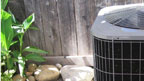
A standby generator is permanently installed, usually outdoors on a cement pad near the utility meter, and is connected to the home's main power panel. It's housed in a protective cabinet and resembles an outdoor air conditioning unit -- although these generators range in size from a small air conditioner to as large as a horizontal shed. Installation means wiring the new generator into the home's electrical system, including adding a new subpanel and automatic transfer switch, and connecting it to a fuel source such as natural gas or propane. Professional installation is recommended. ThisOldHouse.com provides a video overview[2] of the installation process.
The energy produced by generators is not the same as grid-supplied electricity. All generators produce harmonic distortion, which can affect or even damage sensitive devices like plasma TVs, computers or items with complex electronic controls. The total harmonic distortion (THD) of a generator indicates the potential for problems powering sensitive electronics. Generally, a THD of five or six percent or lower is considered "clean."
Additional costs:
Standby generators typically require a higher volume gas meter than what's standard on many homes. Upgrading to a high volume gas meter averages about $1,000, but varies depending on circumstances and local rates. Check whether an upgraded gas meter is needed, and if it's included in any quotes for installing a standby generator.
Several years back a standby generator might have been sold without an automatic transfer switch -- which can add another $1,000 or more -- but today most systems include the transfer switch as part of a package.
Shopping for a standby generator:
Generators are rated by their kilowatt (kW) output. To estimate the kilowatts desired in an emergency, make a list of all the appliances needed during a power outage and add up the amount of electricity required to start their motors. (A typical refrigerator uses 700 watts when it's running but needs 2,800 watts to start up.) Most generator manufacturers' websites provide an online calculator to estimate the wattage needed -- but it's always good to have the generator sized by a licensed electrician.
Some of the major standby generator manufacturers include Briggs & Stratton, Cummins Onan[3] , GE[4] , Generac (Guardian)[5] , Kohler[6] and Winco[7] . In addition to product information, manufacturers' websites also provide referrals to local dealers.
7 Lesser-Known Discounts for the 50+ Crowd As they age, members of the Baby Boomer generation don't like to admit that they're senior citizens, but they love getting discounts. It's kind of a quandary, because some of the best deals available are reduced prices for older folks. || Posted October 21 2013
7 Ways to Stretch Your Reduced Food Budget End of the year budgets are tight for everyone, especially in this economy.It's especially hard for the millions of Americans who depend on government programs like food stamps to help make ends meet. || Posted November 11 2013
Ok deal. I was replacing a old 16kw that went bad. They were able to use my old transfer switch, Cement pad, Etc. it runs on natural gas. No permits needed
Never go thru Big Box Store. Be you own general contractor or use a dealer. But decision to buy was good and I feel more confident as to when mother nature strikes. Cost of frozen pipes, people or pets is to expensive. After a major storm or hurricane life is very difficult, especially for seniors or people with medical issues. Power can be out for extended periods.
Is $7,738 plus $1250 for gas line & connection a reasonable estimate for a Home Stand By Generator? Price includes a 6-year warrantee. Vendor has good reputation
Does not include the propane tank(s) which locally cannot be purchased, lease only. Tank charge is $200.00 for site check/permits $97.00 for delivery and then $12.00 a year for the lease. Generator uses on average 2.5 lbs/hour of propane so 250 lbs tank will last approximately four days continuous use.
I paid $6,000 for the generator and the supplies that came from General (automatic transfer switch, cold weather kit, battery, 4 PPMs, etc.). There was another $12,000 in supplies to run the conduit and wire across the house to the meter and panel. The electrician is a friend and didn't charge for installation, but I plan to pay him $1,500. I also know the owner of the concrete comoany, so the pad was free.
online purchase with free shipping, discount cash back and $1500.00 installation including battery, cold weather kit, electric and natural gas hook up.
I shopped around and Southeast Power seemed to be the best contractor. I felt very comfortable with them. Generator install went great. Although I've had several people question why I installed one, I've been extremely happy the four times I've lost power.
I'm reading this page and wondering how this guy come with the prices.
If a Generac 20Kw contractor or online cost 4,700.00+$800.00 transfer swith,+ $125.00 for battery+$550 to 750 generac tech for start up+ $100.00 crunch stone pad enen do it comes with a plastic pad per code still have to install the crunsh stone.+$500 to $800 misc. electrical wiring conecters etc.$ 1000 to $1,300 for license plomer as well..in top of that you still need the license electrical contractor labor+ contractor over head, plus contractir profit. Its about $ 8,000.00 hard cost plus labor, over head and profit.
Now if you want to include evething.
$ 8,000.00 material and plomer $ 1,400.00 electrician $.1,900.00 contractor over head and profit.
GRM Installed this generator for me, While I had other quotes for as high as $8,100 form other contractors for units as large as 15,000 watts which they said was the smallest I should consider and that would require an additional $500 to the utility company to upgrade the gas meter. GRM said 10,000 watts would be more then enough and sure enough it was plenty. Just recently had a 10 hour power outage and the generator powered the whole house as they said it would without a problem.
CostHelper is based in Silicon Valley and provides consumers with unbiased price information about thousands of goods and services. Our writers are experienced journalists who adhere to our strict editorial ethics policy.
CostHelper Community
UTI urgent care visit Paid: 147.00 Visit was $135. Antibiotics was $12. Waiting for four hours in the waiting room and the visit was quick... [more]
Spanish Medical Interpreter Paid: 150.00 I worked with SynShyne Services out of Monroe, NC. They were so worth the price! Professional, friendly, accurate, great attitude and always on time. I recieved an itemized report after every contact and a user friendly invoice weekly... [more]
Skin prick allergy test Paid: 573.00 Took my 9 yr. old in after an allergic reaction to eggs. Several panels for nuts, fish & top 8 allergens. Sure enough, egg came up. Got a script for epinephrine and left... [more]






 Post
Post