Without Insurance: $150-$10,000 or more Depending on the Type
A biopsy is removal of a small amount of tissue so it can be examined in a laboratory to check for disease.
Typical costs:
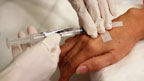
For patients not covered by health insurance, the cost of a skin biopsy ranges from $150 to $1,000. A needle biopsy performed in a doctor's office would be at the lower end of the range, while a surgical biopsy would be at the higher end of the range.
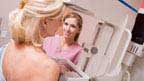
For patients not covered by health insurance, the cost of a breast biopsy ranges from $1,000 to $5,000. A needle biopsy performed in a doctor's office would be at the lower end of the range, while a surgical biopsy performed in a hospital would be at the higher end.
For patients not covered by health insurance, the cost of a liver biopsy ranges from $2,000 to $7,000 or more.
For patients not covered by health insurance, the cost of a kidney biopsy ranges from $3,000 to $10,000.
A biopsy would be considered medically necessary when ordered by a doctor and would almost always be covered by health insurance.
For patients covered by health insurance, typical out-of-pocket costs would include either a copay or coinsurance, usually ranging from 10 to 40 percent of the total cost.
There are several types of biopsies, according to the National Institutes of Health[1] . In a needle, or percutaneous, biopsy, the doctor uses a needle and syringe, sometimes guided by a CT scan, to remove a piece of tissue in the area of concern. In an open biopsy, with the patient under general anesthesia, the surgeon makes an incision and removes a piece of tissue. In a closed biopsy, the surgeon makes a much smaller cut than in an open biopsy, and uses a tiny camera as a guide. Then, the sample is analyzed in a laboratory and the results are reported back to the physician.
The National Institutes of Health offers descriptions of a bone marrow biopsy[2] , rectal biopsy[3] , lung biopsy[4] , liver biopsy[5] , skin lesion biopsy[6] , breast biopsy[7] and a kidney biopsy[8] .
Additional costs:
Using imaging technology such as ultrasound to guide a biopsy can add to the cost.
Discounts:
Some hospitals offer a discount of 10 percent or more to uninsured patients or patients who make an arrangement to pay ahead of time.
Shopping for a biopsy:
A primary care physician can make a referral to a radiologist, a surgeon or another specialist for a biopsy, depending on the body part and type of biopsy needed.
For example, a bone marrow biopsy often is performed by a hematologist; a skin biopsy by a dermatologist; a kidney biopsy by a urologist; a lung biopsy by a pulmonologist; a breast biopsy by a gynecologist; and a GI tract or liver biopsy by a gastroenterologist.
After the biopsy, the tissue usually should be evaluated by a board-certified pathologist for diagnosis.
Any specialist involved should be certified by a board that is a member of the American Board of Medical Specialties[9] .
Material on this page is for informational purposes only and should not be construed as medical advice. Always consult your physician or pharmacist regarding medications or medical procedures.
7 Lesser-Known Discounts for the 50+ Crowd As they age, members of the Baby Boomer generation don't like to admit that they're senior citizens, but they love getting discounts. It's kind of a quandary, because some of the best deals available are reduced prices for older folks. || Posted October 21 2013
7 Ways to Stretch Your Reduced Food Budget End of the year budgets are tight for everyone, especially in this economy.It's especially hard for the millions of Americans who depend on government programs like food stamps to help make ends meet. || Posted November 11 2013
paid about $130 to my skin doctor (that I did choose) and another $470 bill to the pathologist (that I did NOT choose) and this is with "good" insurance. Healthcare in the US is awful.
ENT said nodule found on thyroid during CT scan. Said need biopsy. Went to pathology office, technician used ultra sound to find module. After 5 minutes said she could find anything to biopsy. 2 weeks later get bill for $350 for Ultra sound and $500 for office visit. Ridiculous!! I am appealing charges but have no confidence it will be successful.
This was the bill for a 30 minute procedure that was done by a nurse not an MD. to read the biopsy the charge (in the bill ) was 12,600. this is crazy! I am a Veterinarian and I would have charged -MAX 3000.00 total to the pet parent.
Got skin pathology at doctor office, the doctor cut a small piece of skin and sent to SAGIS. Sagis billed $1,737 for a tiny skin biopsy taken in a dr office. They lowered the bill by $746.81 for "insurance adjustments". The insurance paid $171.46. I'm responsible for $819.73, and that is after insurance. The doctor office cost about another $100.
Medical Center: Highlands Regional hospital outpatient
Insurance: Cigna
Had an outpatient breast needle biopsy which took less than 1 hour. Calcifications found. They billed my insurance over $17,000 and with my deductible and coinsurance I owe $4,479, even with a 10% discount. Ridiculous. Not sure how they get away with such scams!
my wife had a mammogram, was called back and told she had dense tissue and required a needle breast biopsy.Everyone I spoke with recommended she have it done. I made the mistake of going to a Tier 3 provider instead of a Tier One and my co-pay is $1,250 plus my wife has a $6,000 deductible, so we're on the hook for $3,600. I agree with others on here. This shouldn't be considered surgery but preventative care. Her biopsy was negative, no cancer but they still wanted to operate. This time I picked a Tier One provider and my co pay was only $250.- from a $23,000 bill! Medicine should not be for profit! You shouldn't have to "shop" around for the lowest cost when it comes to your health! This is disgusting!
Medical Center: TEXAS Health Breast Imaging Dallas
Insurance: United Healthcare Group EPO
I have high deductible insurance (6k) so this is all out of pocket. At least the negotiated rate is $4100 when the full rate is $7000. I think I will incremental bills from the radiologists....
Had a regular mammogram, got called back for a 3D mammogram and ultrasound, they couldn’t be sure what it was so did the biopsy. It was done using a ultrasound and took about 40 minutes. Was shocked to get a bill for $9000, I owe about $2400, so relieved it was benign, but cost seems excessive for a really common test.
Medical Center: Froedtert and the Medical College of Wis
Insurance: United Healthcare
Went to the ob/gyn for my yearly exam. Told her the persistent heavy bleeding and debilitating pain. Was told I might have endometrial cancer and a biopsy was required. While doing the normal pap smear procedure, the biopsy was done. Less than a 2 minute procedure start to finish. Total billed to my insurance was in the ballpark of $13k. I'm stuck with a bill just under $3k versus relatively $0 because it was deemed not a necessary test. My apologies to United Healthcare. I didn't know the threat of cancer wasn't animportant test. Turns out it wasn't cancer, just hormonal imbalance :[
Posted by: Much wiser now in Central VA in Esmont, VA.
Posted: May 5th, 2018 02:05AM
Medical Center: VA Breast Center
Insurance: Optima Health
After receiving a bill for $2,800 I requested an itemized bill and discovered that I had been billed twice for two of the items! They billed for a bilateral biopsy when I only had it done in one breast. After the bill was refigured my part was $705. I believe that centers double bill on purpose, hoping that you'll pay - in other words they throw it against the wall to see what sticks. They need to be investigated. Never pay before seeing an itemized bill!
Medical Center: Northwestern Medicine Central DuPage Hos
Insurance: Aetna
What they did is that they took a sample with a needle using ultrasound. That's it. It's not surgery or anything like that. The procedure took about 20 minutes. Insurance covered about 75% and now I have to pay $2200. Nobody checks or controls these con artists!
2018: Microcalcifications were found on mammogram. Breast center courted me like the devil with calls and letters to come in for biopsy, the sooner the better, etc. Doctor and staff were professional, but after getting the bill ($6,100 for less than an hour procedure) my part would be $2,800. I haven't paid yet, I'm going to call them to fight at least some of it. I'm glad it was benign, but what gets me is after the procedure, no followup at all from the office, they didn't even call me with the result, I ended up calling them a week after the biopsy. Truthfully, I feel used. These centers use scare tactics to get women in, but don't get back to you except to send you a whopping bill! Very lucrative business for them!
For an outpatient Breast Needle biopsy that took 1 hour in and out. Legacy billed $5,201.41 - Regence discounted it to $3,178.90 - I called Legacy and asked for further discount because we have high deductible. They took 10% off. Final cost I paid was $2,861.00. We received good service but I think that is still very overpriced.
Posted by: Screwed by the Medical System in Tulsa, OK.
Posted: January 3rd, 2018 09:01AM
Medical Center: Hillcrest and Chapman
Insurance: Yes
I was in shock. I went to the Chapman center and they did the Biopsy there, but Hillcrest billed the insurance company total cost so far 16,000. insurance covered some I had to pick up 6000. so far. I felt they should have told me they were billing under a different name. Hillcrest is not a part of my network.... Will not go back....
I have medical and they said they accept medical but not fully, it only deducts from the cost. They did a simple 5 minute biopsy in the office, afterwards the PA who did the biopsy, told me it would cost extra. I paid $208 at the office. She did not tell me that the lab would bill me! I just got the lab bill and it is $284!!!!! I'm so angry I wasn't told it would cost extra!!!!
This was a procedure less than 1 hour. Lab $ 274.00 Procedure $5123.00 Radiology $ 369.00 Supplies $ 356.00 Insurance adjusted $3014.42 for a balance due of $3107.58 I don't know if there are any additional charges as this is the first bill I received for this procedure.
I had a needle aspiration of cysts, 1 in each breast. It was a 30 minute procedure where they radiologist inserted a needle with ultrasound guidance in each cyst and sucked out fluid. 2 needles, 2 bandaids. The cost they billed for the procedure including doctors and labs was approx $13,000. Aetna billed as outpatient surgery and I have 30% coinsuramce with $1000 deductible/$4000 out of pocket. I have to pay $1500 - for 2 needle pocks and 2 bandaids. this is criminal. Oh, all was benign. Plus the Mammo that started this all was billed as diagnostic (even though it was my annual) so I'm being charged another $450 for that when it should be $0.
Lab Path was $1503, Treatment/Observation was $1388, then the insurance payment was $1359 with a separate insurance adjustment of $1381, assuming that's UCSF not bothering with the negotiated UnitedHealthcare reimbursement. 10% coinsurance meant I was around $151
Medical Center: Safeway Breast Foundation Portland
Insurance: Providence Health Plan
So my cost is actually more than that b/c I had not yet met my deductible. The procedure itself is likely $5000 according to the business office for my radiologist, though they have not yet filed the claim. My insurance pays 80% after I meet my deductible. Procedure took about 1 hour, and results came back benign. I will say that the care I received was excellent. I just find the cost a little surprising.
Dr. bill for exam/freeze off some pre cancer bumps and surgery for mole growing on lower eye lid was under 500.00-excellent the biopsy costs seems impossible.Seems that these costs vary greatly and are for most part way overpriced. I will be in china next few weeks maybe we should look at this work going off shore...when their I will compare costs
I was told I had 3 options, watchful waiting (not recommended), a needle biopsy, or a full surgical biopsy, which the surgeon recommended because I had a prior biopsy with a-typical ductal cells... So they said the procedure is $11k and I would have to pay $5000... or they could do a "self pay" and I will only pay $2,336. So now I am considering to not get it done... Research shows that 25% of biopsies come back positive... so I think I will wait. I can't change my insurance until next Sept.
Total time spent: 40 minutes.Biopsy results:not enough cells for the doctor to render a diagnosis Amount charged definitelyexorbitant,due to the fact that it is a "hospital based facility".Considering you can buy a car for the price of a non-surgical exam with failed results,(we still donot know if it`s malignant)you can see the absurd injustice of our medical billing system.
I was told the doctor is paid 100% anesthesia 20% and the facility $75.00. This is what my insurance covers. The Facility use and equipment, my cost, $4500 for about 30 mins. No lumps, two mammograms with "something" seen in both by radiologist, but on third visit with actual doctor and a second ultra sound, nothing seen..but the doctor now sees something else, close to the surface, but stymied. No lumps, discoloring,raised marked, no history in family of breast cancer. So just to be sure it is nothing, need this biopsy. Glad I called my insurance carrier. I cannot imagine a facility, not an operating room, charging this cost and that is a lower cost of what they would accept from the insurance company if it were covered. Cancelled my appointment and getting a second opinion on the films and ultra sound. No feeling very confident in who saw what!
Original cost billed to insurance was $25,000.00. Did NOT include Dr. Fee ($380), or Pathologist Fees. Total time from out-patient check in to check out was less that 3 hrs. With the high insurance premiums and inflated medical costs I'm not sure either one is looking out for our interests.
I also was encouraged to do a "let's be sure but probably nothing" follow with biopsy done in an office setting in OKC March 2015. Office personnel acted as if this was just a run of the mill procedure & did not have me sign any special paperwork or discuss costs. Live and Learn!! After receiving their bill & the radiologists bill, total cost is nearly $10,000. My portion after insurance will be almost $3000.00 Ask questions!! See what cost is without insurance, it may be cheaper!
Medical Center: John Muir Hospital Walnut Creek, CA
Insurance: Blue Shield
I have not had the procedure yet but I am told it will be approximately the price above. I have a 20% co-insurance which would be $2560.00. The hospital is coding the procedure as a "surgery" hence the 20% co-insurance, for a one hour, outpatient needle biopsy. This is outragious. It should be classified as preventative with a copay so those who can not afford 20% of an outragious price can at least have it done.
CostHelper is based in Silicon Valley and provides consumers with unbiased price information about thousands of goods and services. Our writers are experienced journalists who adhere to our strict editorial ethics policy.
CostHelper Community
UTI urgent care visit Paid: 147.00 Visit was $135. Antibiotics was $12. Waiting for four hours in the waiting room and the visit was quick... [more]
Spanish Medical Interpreter Paid: 150.00 I worked with SynShyne Services out of Monroe, NC. They were so worth the price! Professional, friendly, accurate, great attitude and always on time. I recieved an itemized report after every contact and a user friendly invoice weekly... [more]
Skin prick allergy test Paid: 573.00 Took my 9 yr. old in after an allergic reaction to eggs. Several panels for nuts, fish & top 8 allergens. Sure enough, egg came up. Got a script for epinephrine and left... [more]






 Post
Post