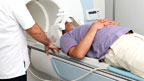
A mammogram is a breast X-ray used for early detection of breast cancer. It is recommended yearly starting at age 40. A clinical breast examination, in which a doctor or nurse examines the breast for lumps or irregularities, is recommended once every three years starting at age 20, then once a year at age 40 and up.
Typical costs:
For an uninsured patient, typical full-price cost of a mammogram ranges from $80 to $120 or more, with an average of about $102, according to Blue Cross Blue Shield of North Carolina. Some providers charge more, and some offer an uninsured discount. For example, at the Kapiolani Medical Center[1] in Aiea, Hawaii, where the full price is about $212, an uninsured patient would pay about $127 to $148.
Mammograms usually are covered by health insurance for women in the recommended age bracket. Many states require health insurance companies to cover regular mammograms, usually after age 40. The National Women's Law Center offers a state-by-state chart.
For women covered by health insurance, some plans require no out-of-pocket expenses, while others charge a copay, generally between $10 and $35.
A clinical breast exam is much less expensive, and usually is included as part of a general or gynecological check-up.
The mammogram technician places the breast between two plastic plates, which compress the breast tissue so a clear X-ray can be taken. The procedure takes about 20 minutes.
The American Cancer Society[2] offers a primer on early detection of breast cancer. Only two to four of every 1,000 women who undergo a mammogram end up receiving a diagnosis of cancer.
In a clinical breast exam, the doctor or nurse manually checks the breasts, lymph nodes and nipples for any palpable irregularities.
Additional costs:
Women at high risk for breast cancer, such as those with a known breast cancer gene mutation, should consider getting an MRI each year in addition to a mammogram, according to the American Cancer Society.
If an irregularity is found, more testing or follow-up testing might be required. About 10 percent of women who have a mammogram require more tests, usually just another mammogram. However, about 8 to 10 percent do require a biopsy.
Discounts:
During the month of October, Breast Cancer Awareness Month, some community or women's groups offer free or very low-cost mammograms, sometimes using a mobile clinic. To find a program, call the Susan G. Komen for the Cure Breast Care Helpline at 1-800 I'M AWARE (1-800-462-9273). Or contact the YWCA's ENCOREplus[3] program any time for a referral for a free or low-cost mammogram.
Visit the U.S. Centers for Disease Control and Prevention website to find a program in your area that offers low-cost or free mammograms to uninsured and underinsured women who qualify.
Shopping for a mammogram:
If you have health insurance, consult with your general practitioner or gynecologist to get a mammogram and/or a clinical breast exam.
Otherwise, check with your local Susan G. Komen for the Cure affiliate to get more information on planned screening events. Or, call your local health department or use the Planned Parenthood Federation of America, Inc.[4] 's online search feature to find a local clinic.
For mammorgrams, the American Cancer Society recommends using a facility that performs many mammograms each day, and is authorized by the U.S. Food and Drug Administration to perform mammograms.
Material on this page is for informational purposes only and should not be construed as medical advice. Always consult your physician or pharmacist regarding medications or medical procedures.
7 Lesser-Known Discounts for the 50+ Crowd As they age, members of the Baby Boomer generation don't like to admit that they're senior citizens, but they love getting discounts. It's kind of a quandary, because some of the best deals available are reduced prices for older folks. || Posted October 21 2013
7 Ways to Stretch Your Reduced Food Budget End of the year budgets are tight for everyone, especially in this economy.It's especially hard for the millions of Americans who depend on government programs like food stamps to help make ends meet. || Posted November 11 2013
Went for my annual routine, but asked about a lump, so of course my insurance didn't cover the cost at all. Was told it was a lymph node. The $1014 was mammogram and radiologist and the 'discounted price'. Mammograms are too expensive.
Any radiologist reading your mammogram will be at least $350. They have 11-13 years of training after high school before they begin work. If they are not board certified, watch out. Most are and it beats getting cancer. Reading mammograms is very difficult and technical work.
I paid extra for a zero co-pay on this, but the bill does show the cost. As a former hospital worker, this is pretty fair. The MD gets $400 for reading it. The digital imaging unit costs over $150K and is obsolete in 2-3 years. Worker bees that make all this possible spend a total of 3 hours for you to get this 20 minute procedure, and then there's the building cost, depreciation, new chairs, etc. Planned Parenthood is a good alternative if you have no insurance. Cancer is not a good alternative.
Clinic or Doctor: Weill Cornell Imaging at NYP, 61st locat
Insurance Carrier: United Healthcare
Type of Policy: Choice Plus HSA
My 2021 bill, still in shock! Weill Cornell, in-network provider, billed my insurance $908 for a bilateral diagnostic mammogram, and $712 for a third mammogram one breast. My deductible is high so I have to pay a $694 for the bilateral diagnostic mammogram, and $694 for the third mammogram, one breast, a total of $1,389 just for mammograms. Now Lenox Hill Radiology, in-network provider in the same city of NY, billed my insurance last year (2020) in July for exactly the same services, a bilateral diagnostic mammogram $357, and $265 for a third mammogram one breast. I ended up paying $386 for both as my deductible. Same insurance, different providers. Imagine my shock when I got the bill this year! $1,389 this year vs $386 last year!
I did not actual pay since screening is covered by my policy but I think people should know what the actual cost is. It is much higher and by the way I cannot find price list for 2019 to even check my costs! In any case, $530 for screening and I believe then $530 for the diagnostic.
Clinic or Doctor: Mission Health/Asheville Radiology Assoc
Insurance Carrier: BCBSNC
Type of Policy: Bronze ACA
I had a 2D and got called back for a 3D follow up that turned out to be fine. After taking out a few tiny discounts because I have BCBS, Asheville Radiology Associates charged me $242 and Mission Health charged me $191.
Got a mammography at Phelps/Northwell branch in Croton-on-Hudson, NY. Later told I needed another test, to go to Phelps Hospital in Sleepy Hollow, NY. Set up appointment and went to Sleepy Hollow. I asked what test would cost me out-of-pocket. No one, even Phelps Patient Services Dept, could tell me what MY cost would be. I walked out w/o having test done ... A few years ago went to Phelps for X-Ray of my Neck. Total Phelps billed was $5,950. Told because I'm a senior citizen they did "extra" tests. 2 blood tests, chest x-ray, EKG, and more. Thievery, IMO.
Clinic or Doctor: Alta Bates Summit (Carol Ann Read Breast
Insurance Carrier: United Healthcare
Type of Policy: Choice Plus HSA
CPT code 77066(3D mammo): $619.00, code G0279(ultrasoud): $160.00, code 76642(ultrasound right breast limited): $614- insurance adjustments $-334.32 = ***facility bill was $1058.68 out of pocket*** ***And Radiologist billing was $309.40 out of pocket*** by Bay Imaging Consultants code 77066 $180.00, code G0279 $150.00, code 76642 $112.00 insurance adjustment $-132.60 = $309.40 Medical system is totally corrupt.
According to Affordable Care Act, women were supposed to be afforded coverage for these tests, but I have during the ACA paid from $700 to over $2000 for mammograms with insurance saying everything from not picking up any to paying what amounts to perhaps 25 percent of fees. Paid $733 after insurance covered some - Paid for Ultrasound and Diagnostic Mammogram 3D at advice. Family history but no personal history. About 5 years prior to ACA tests had no cost after insurance, not even copay or fee, now ranges from all shot back to me with some small reduction on HDHP to covering 1/3 to 1/2 of much higher costs.
I Had a routine mammogram then had to have the right side repeated(needed a better reading). Insurance said it was not covered in our policy. Firelands Regional Medical charged me $241.00 for the routine mamo, then charged me $256.00 for the repeat on my right side only. Precision Radiology charged me $275.00 to read both of them. Total for yearly mammogram $772.00. The best part is they told me I will need to repeat my mammogram in 6 months. I'm shocked!!!! How do they expect people to pay these fees? It's time things change with health care.
My insurance payed the bill in April 2018 $140, what I was told back then was the cost of the procedure at the office. Now, 2019 I’m getting a bill for $784.12 for Scrn Mammography. Called them and they said the $140 was for the doctor’s charges, but this bill is for “Hospital” charges. Just got my LAST mammogram ever in this country.
I told them up front I was self-pay. There were absolutely no deductions allowed; they claimed that's what they charge the insurance companies. If I pay the full amount within 30 days, I get a 25% reduction (anyone have $417 laying around?). So if you are self pay in Idaho, apparently you can take the hit on your credit card to get the 25% discount (and pay interest) or you don't get the screening or you default on your payment. I know they give a discount to insurance companies. I was told it was the same discount I get if I pay the full bill within 30 days. Not true; the MOST Blue Cross of Idaho would ever be charged is in the $350 range--or less!
At 38, I needed a mammo screening due to pain. I had not met my deductible so had to pay out of pocket $500.58 for a screening mammo which all primarily went to the facility (equipment charges). The doctor fee was $452.00 and the hospital equipment/technical fee was $800.00. Screening was negative, but sure ended up with a hefty bill.
Stay far away from John Muir imaging. $1,788.50 facility fee and $404 imaging fee. My insurance said it would be $0 covered, but they're covering about 1/4 of it. I think I'll take my chances with the cancer rather next time.
I walked out of the appointment this was after hanging up on the person who told me it would be $300/breast since they needed to do 3D and ultrasound. Mind you, I had this same procedure done years ago and it was included in my insurance and a family history of lumpy boobs, including my history of fiborous breasts. All normal results. So at the age of 37, women’s doctor asks for it. I then get call oh and here’s what you gotta pay...I told the lady at Simon Imaging to cancel it and hung up phone. So lady doctors call me back and I explain, the health insurance will pay for it if it’s a “screening” oh but not if it’s a diagnosis. So doctor switches orders to be “screening” forgetting to leave cyst defection in orders leading them to tell me at appointment they can’t do a screening they could lose their license and the insurance wouldn’t cover it. Thanks Blue Cross you factor in women death into making us fork out this on a regular basis, if theirs a place in hell its insurance
At 29 I had a hip fracture from running too much on hard surfaces. An over-zealous geriatrician decided it might be from breast cancer that had spread to the bone. Boy did I have a hard time convincing the radiology office to schedule my mammo at 29. Then, because I have dense breasts, I had to have an ultrasound. All with no findings of any cancer. At that point, all was covered after I met my deductible (since I'd had surgery for the hip two weeks prior). I am grateful they checked everything out but, yeah, hospital and in office procedures kick money back to the doctor's practice. Be wary of what you are advised and do your research. BTW that surgery was billed at $15K of which my insurance then paid $8K. The same surgery would be billed at $30K today. Doctors used to make slightly more than normal pay. Thank our education costs and greed for the price hikes.
Clinic or Doctor: Hendersonville Radiological Consultants
Insurance Carrier: Medicare
Type of Policy: Medicare
I'm stunned at the cost for this procedure. Plus another $1018 for ultrasound on both breasts. $1790 for the two procedures! No wonder this country's health care is out of control. Nice that Medicare covered 89% of this, nonetheless, it appears to me that the medical complex is fiscally raping the United States of America. (I returned 18 months ago from living out of country for 23 years. I may be zipping away for my future health care.)
Posted by: Ridiculous cost for "needed" tests in San Luis Obispo, CA.
Posted: July 9th, 2017 12:07PM
Type of Policy: Blue Cross PPO
Went for preventive mammo (covered 100 percent). I turned down a 3D mammo, recommended by mammographer but not covered on my plan. I went with standard Mammo. They found something and followed up with (diagnostic) mammo and ultrasound. I had to pay $125 on the spot for these 2 additional tests. I was not happy about it but had no choice. Now I receive an additional bill for $440 from facility for procedures and another $80 from radiologist for reading the ultrasound. In my opinion, it's outrageous for someone to pay $730 for "diagnostic" procedures when nothing was wrong. How is it possible for health insurance companies to not cover more of the cost when a woman is told she "needed" these tests? The cost here, is WAY more than tables suggest for my area, and I stayed in network. How was I to know that this diagnostic procedure, was not covered by my insurance beyond the $125 I had to pay to get the "diagnostic" tests? No wonder more women do not have mammograms. Too expensive.
Went for my first ever routine mammogram after turning 40. The radiologist took extra look at one spot. Billed $653 to insurance as diagnostic. Won't be going back for a followup in 6 months just to line some radiologists pocket.
I'm surprised I haven't seen any comments on this, but um, there is juuuust a tad bit of a discrepancy between what this article cites and what patients are paying... The site says an average of $250-$300. Yet many patients are citing over $1k - $2k!!! How can there be that big of a gap? Either someone isn't in touch with reality, or hospitals apparently are allowed to just bill you whatever the hell they want!! I'm shopping for a 3D mammogram, but am now very worried about these surprise costs!! Any thoughts or insight into why there is such a huge gap between the article and the testimonies, and how to avoid going deep into debt just to get a checkup? Thanks!
I got the same charges as DT and it ended up on a bill for $640, never go to Northshore Hispital for any medical, they are looking to get money from your insurance and make you to believe that you are sick and you need all kind of check up. Your bill will be so high, they make you pay for what you don't have
CostHelper is based in Silicon Valley and provides consumers with unbiased price information about thousands of goods and services. Our writers are experienced journalists who adhere to our strict editorial ethics policy.
CostHelper Community
UTI urgent care visit Paid: 147.00 Visit was $135. Antibiotics was $12. Waiting for four hours in the waiting room and the visit was quick... [more]
Spanish Medical Interpreter Paid: 150.00 I worked with SynShyne Services out of Monroe, NC. They were so worth the price! Professional, friendly, accurate, great attitude and always on time. I recieved an itemized report after every contact and a user friendly invoice weekly... [more]
Skin prick allergy test Paid: 573.00 Took my 9 yr. old in after an allergic reaction to eggs. Several panels for nuts, fish & top 8 allergens. Sure enough, egg came up. Got a script for epinephrine and left... [more]






 Post
Post