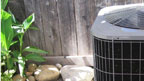
A heat pump heats a house in winter and cools it in summer by moving heat from one area to another. Air-source heat pumps capture and move heat between the indoors and outdoors, while geothermal (ground-source or water-source) heat pumps capture and move heat between the indoors and the relatively constant temperatures just below the earth's surface. Heat pumps are best suited for climates with moderate heating and cooling needs; for colder regions, a dual-fuel system pairs a heat pump with a back-up fossil-fuel furnace.
Typical costs:
Installing a small through-the-wall or window unit air-source heat pump to cool and heat a single room costs about $500-$2,000.
Expect to pay about $2,000-$8,000 for installation of a whole-house air-source heat pump system in an average home (three-ton capacity) with existing usable ductwork. The total costs can double or triple to $4,000-$24,000 or more if new ductwork must be installed or failing ductwork must be replaced.
For a whole house system with existing ductwork, a typical split system (one unit inside, one outside) air-source heat pump costs $2,000 -$5,000 for an average home (three-ton capacity). If adding ductwork is cost-prohibitive, professional installation of a ductless mini-split electric air-source heat pump system (an outdoor compressor and mounting one or more indoor units) for an average home (3 ton capacity) can cost $2,000-$7,000 or more but averages about $4,000-$5,000, depending on the number of indoor units or zones installed.
For less moderate climates, installing a dual-fuel air source heat pump that works with a natural gas or propane furnace under a single control system can cost $2,500-$5,500 to install just the heat pump, or $5,000-$25,000 or more for a complete system that includes both the electric heat pump and a fossil-fuel furnace.
Complete installation of a geothermal heat pump (ground-source or water-source) can cost $10,000-$25,000 or more, depending on the length and depth of the underground pipes, soil conditions and other excavation and installation factors. More expensive systems may include options such as a two-stage compressor or a hot water heater.
The technology is still evolving for residential use of absorption heat pumps[1] , which are air-source heat pumps driven by natural gas, propane or solar-heated or geothermal-heated water. Also called gas-fired heat pumps, most current absorption heat pumps are sized for industrial or commercial use, or for residences of 4,000 square feet or larger (and usually without an outside electricity source).
Because heat pumps move heat rather than generate it, they are an energy-efficient alternative to furnaces and air-conditioners, according to the Department of Energy[2] . A properly working heat pump warms a house slowly and maintains an even temperature, sometimes without the blasts of hot air provided by other methods, such as a forced-air furnace.
Additional costs:
In an older home, adding an electric heat pump might require hiring an electrician to upgrade the electrical panel to 200 amps, which can cost an additional $1,300 -$3,000. Kansas City Power & Light provides a detailed overview[3] of the different types and uses of heat pumps.
Discounts:
Energy-efficient appliances often qualify for low-cost loans, tax credits or rebates. The database of State Incentives for Renewables & Energy Efficiency[4] tracks energy-efficiency incentives offered by utilities and by state, federal and local government agencies.
Shopping for a heat pump:
The Department of Energy lists factors to consider[5] when buying a heat pump.
The Cornhusker Public Power District provides a checklist[6] for hiring a heat pump contractor.
Referrals are available from the North American Technician Excellence certification program[7] and the Air Conditioning Contractors of America[8] -- and the local power company may have a list of contractors in the area.
Request and check references; ask about length and type of experience; and be sure they are properly bonded, insured and licensed.
7 Lesser-Known Discounts for the 50+ Crowd As they age, members of the Baby Boomer generation don't like to admit that they're senior citizens, but they love getting discounts. It's kind of a quandary, because some of the best deals available are reduced prices for older folks. || Posted October 21 2013
7 Ways to Stretch Your Reduced Food Budget End of the year budgets are tight for everyone, especially in this economy.It's especially hard for the millions of Americans who depend on government programs like food stamps to help make ends meet. || Posted November 11 2013
I has a new GOODMAN 18-SEER heat pump installed to replace my existing 12 year old system. With the demise of the old refrigerant and the estimated SEER rating of about 10 for my old system, I found this a good time to replace. $300 federal tax credit will help also. I choose to price out the components on the web and used several HVAC wholesalers. My installer was able to match the price. (www.ecomfort.com, https://hvacdirect.com). Price was $3400 for parts, $1800 for labor. Took about 4 hours to completely take out the old system and replace the new one and turn the breakers back on. This was 2 guys working for 4 hours, so the labor was 8 total labor hours @ $1800 = $225 per hour. Some other HVAC companies were going to charge me upwards of $9500 for a inferior system (14 SEER). This system I have is a 18-SEER unit and both the outside compressor and indoor air handler unit are dual stage. In other words, they have the capability of running at a slower speed.
Need to decide whether to repair or replace my 4-ton 11-year old heat pump. Repair is $1500 with no guarantee how much longer unit will last. New Tempstar unit(never heard of that brand) is $6K installed with 10 year warranty. That's a lot of money, not sure how to tell if it is a fair price. I do trust the guy that gave me the quote.
I have two DX split systems with electric heat from 2003 - one is 1.5-tons and the other 2-tons. I am replacing them with heat pumps. One leaks R-22 and the other condenser is from 1998. Some contractors say I can reuse line sets others say I cannot. I read other posts on this issue. I am trying to figure out the differences in cost. Is there a per foot installed cost for the line sets? If I replace the line sets (one approx. 80' the other 50') running through the attic. What should I expect if they are all 14 SEER which contractors recommended? I have 7 quotes that range from $10,000 to $20,000.
Installed in 2006 inside/outside heatpump, new ductwork 3.5 ton unit, electronic air cleaner, ultra violet light bacteria killer. Problems from day 1. Unit runs almost continuously, doesn't cool very well when outside temps in upper 90's.even though thermostat set on 75. Auxillary heat runs a lot when temp below 30. Outside compressor has been replaced 2x. Outside exaust fan replaced once. Tried for over 3 years to get SEARS to replaced the unit under the lemon law but they wouldn't. Personally glad SEARS going under.
I am looking for a recommendations from anyone who had a great experience with exceptional pricing with their install and contractor please. Need one desperately.Please email me with Heat pump contractor in the subject line, just found this site but check my email very often. [email protected]
Just got an estimate for a DAIKIN 16 SEER 4 ton DZ16TC048 Two stage heat pump with a Daikin Variable Speed air handler. We got a 12 year parts warranty and paid an extra $800 for 12 year labor warranty. First three maintenance visits are free. The Condenser is on a third story balcony so a crane was needed which increased the cost by about $1000.00 I am sure this could have been done cheaper but we wanted a unit with a good warranty and humidity control being on the water in Florida. The summers can really work these units. We've used the company to install two unit in our last house (Amana) and were very pleased. Installing today! Wish us luck.
Trane died - replaced with a Nordyne unit. Though I said it is an Tappan - I peered out the window and overheard one of the installers ask "what name is this unit supposed to be?" Other Guy said something - could not hear. The installer then took out 5 or 6 name plates from his back pocket, flipped through them like a deck of cards then placed the Tappan plate on the front. Folks - is this the way buying an Heat Pump is supposed to be?! (The unit did not appear to be as stout as the unit being replaced but the installer was so polite and convincing the unit is well built.) Anyway - six years later - my Pump makes a racket, leaked out a lot of oil. My NEW technician said He could replace the dead condenser for $1,700.00. My innards is telling me spending that kind of money to repair a poorly built 'unknown' unit is absolute madness. Here I am in 2017 wondering what to do now? Which brand should I put my faith in now? Being on an annuity - makes these decisions traumatic.
Ducane 4HP14L36P-8A heat pump. Ducane BCE4M36S00NA4X varible speed air handler. Honeywell Prestige IAQ thermostat. Replaced original electric furnace in a 1980 tri level house 1800sqft. No ductwork required. The new thermostat is powered over the existing cable so no more batteries. Took two guys about 10 hours and a visit from an electrician. They did a good job, pressure tested the system with nitrogen over their lunch break for leeks. System uses approx 44% less electricity to heat house compared to the old 20kW electric furnace with an average outside temp of 50F/10C Local electric co offers $1500 rebate which brings the cost to me down $5860. Didn't opt for the $100 internet module to controll it from my phone, Ive worked in IT for 16 years and do not trust "the internet of things" nor do I need everything in my house accessable from the internet.
I competitively bid the replacement of my 17 year old York HP which was worn out. I think I got lucky on the timing; because I got a $1000 rebate from York, $250 rebate from VA Power, a $125 rebate from Shipps HVAC. The price also included a 10 year parts and labor warranty From York/Shipps. The York Affinity HP is York's top of the line flagship brand HP. The ASHRAE rating for this HP 17 SEER and 10 HSPF and are both quite high. The HP is a two stage compressor in the outside condenser a Johnson Controls Unitary Products variable speed air handling unit. The HP system was installed in April 2014 and it is now Sept 17 2015. The York HP system has performed as specified and I am very happy with it. Also, I had my entire air distribution ductwork(38 years Old) cleaned prior to installation of the new HP. I now have very little dust in the house.
Posted by: Dr Gwen A Roberts-Foote in Kerrville, TX.
Posted: July 22nd, 2015 01:07PM
Brand: RUUD Super 12
Model: Super Efficient 12
Installer: Hardin AC/Plumbing
Type: Electric
My husband and I purchased our 2.53 acres in a restricted subdivision with 96 home-sites This was to be our "retirement" home. We have been extremely well-pleased with its function, utility cost, and quietness. We would suggest that anyone within this area consider this when installing/replacing AC/Heat.
Installed about 2 years ago superb contractor-extremely professional. Made duct modifications. Above price was net after $1250 Cool Cash rebate. State and federal tax credit/incentive dropped the net cost down to circa $6500. (these credits/rebates no longer exist) *Extremely quiet* system inside the house and out. (would estimate 80 percent less noisy than standard system, essentially silent inside on low speed where it runs most of the time, very even temps, warm in winter with heat pump. Gas auxiliary heat backup in (with current setting) below 40 degrees. Contractor pulled permit. Used tin plated evaporator coils which are more corrosion resistant and cost more money. Would install the same system again at full price. Couldn't be happier
A site such as this were folks are thinking a 5 ton heat pump condenser costing $1400 wholesale is a rip off if a contractor charges $5000 installed is a bit silly. Anyone thinking a contactor is going to install a unit for $400 over the wholesale cost is living in a fantasy world. Maybe some moonlighting, or retired guy with no sense might do the job. The reason most units have very short lives is because they were installed wrong, are too small, or too large, or the ducts system is a mess of air leaks or exposed to an unconditioned area. Just a heads up, always get a second opinion, after 35 years in this business I can tell you most contractors pay their employees based on performance pay. That means if they don't sell you a new system or some item, they don't make more then a very small base pay. A well installed and properly sized cooling or heat pump system will last 30 years no problem. My cooling system in my personal home is 30 years old and works perfectly.
Ive read some comments. Most contractor dont charge $15,000 that is a rip off. most changeouts run around $3500 to $5400 according to seer, size, name brand. Talking about online WE dont buy online cause as a comment mentioned. Manufactures DO NOT cover warrenty of your unit if bought online so contractors has to buy from distributers who charge more than online because they cover the warrenty.. a unit online maybe $1250. but our cost with legit distributer is around $1400 just for condensor. then indoor another $600 to $800 heater bank. $100 to $150 t-stat $50 to $80 new line sets $150 to $250.. ads up.. then we make markup, thats how a business makes money. we have to pay insurance ,inventory. rent. gas.. etc..most companies are around 25% to 30% markup. then there is trip charge. labor. and tax. No one is in business to install units for free.you have to make a living.. yes you can save money upfront buying online,, but it warns you. voids warrenty.cost you more in longrun.
A/C companies are really ripping off people. We bought a high SEER unit for $1267.00 - 5 ton unit folks. Yea, we have been builders for 20+ years, so we knew kind of what we were doing. But this was our FIRST install. We hired a local HVAC company to charge the Freon in the line set, do the final hookups -cost was $500. My wife did all the electrical-what she does. So, when you pay $15,000 for a unit that wholesales for $1200 - you are getting ripped off in a major way. Negotiate, you might be able to get $$ down. Knowledge is everything.
UNIT SITS OUTSIDE/PLENNUM AND DUCTWORK GOES UNDER THE MOBILE HOME ..WE HAVE ADDED ON AND HAVE APPX 2300 SQUARE FEET OF LIVEABLE SPACE AND BEING 24 X 86' LONG NOW. ELECT BILLS ARE GETTING TO BE OUTRAGEOUS/ UNIT WAS INSTALLED IN 1994 ..IS THIS UNIT TOO BIG ? IT WORKS FINE BUT SHOULD IT BE REPLACED DUE TO AGE..?? THANKS
All system should be installed by a licensed and insured person. The city and county must make inspections. If the work if not proper, call the licensing board of the state you live in. Its hard for me to think with the internet and common sense, people do not know what to do. If a person is not licensed and get permits he is a crook. You don't need a lawyer, call the inspections departments and the hvac license board.
I had a Amana 16 seer heat pump and variable speed air handler installed in my home. The company did a great job on what I could see but the electrical inspector found some faults and the electrical was contracted so they did not make sure it was fixed. It cost 9k and to be honest I was disappointed with the level of professionalism I received for what I had paid for. So when I wanted to put heat in my shop I installed it myself and bought the unit online and saved a bout 3k all I sublet out was the refrigerant and they had to warranty the unit. Most always the units purchased online void the warranty
Service man for home warranty co. Came out twice & concluded the system is working fine. However, it runs almost constantly & makes very little difference in temp in house. 1800 sq ft home with Dec bill of $419. Not even very cold (SW MO) in this area. Runs on auxiliary heat most of the time. Home is for sale but have to replace heat pump. Does the quoted price seem fair? Any ideas on dealing with warranty co.? System is 18 yrs old. New compressor last year replaced thru home warranty plan.
I keep hearing talk about heat pump system and would just like to add my opinion . For people living in the New England area I would not recommend them . When you live in a area that gets really cold and stays in the 0 to 30 degrees for the winter heat pump system don't work that efficient . I know there is electric back up heat in the system . This is fine when it is used now and then but it is not ment to run twenty four seven . It should not be your primary source of heat . They work better in parts of the country that have mild winters.
CostHelper is based in Silicon Valley and provides consumers with unbiased price information about thousands of goods and services. Our writers are experienced journalists who adhere to our strict editorial ethics policy.
CostHelper Community
UTI urgent care visit Paid: 147.00 Visit was $135. Antibiotics was $12. Waiting for four hours in the waiting room and the visit was quick... [more]
Spanish Medical Interpreter Paid: 150.00 I worked with SynShyne Services out of Monroe, NC. They were so worth the price! Professional, friendly, accurate, great attitude and always on time. I recieved an itemized report after every contact and a user friendly invoice weekly... [more]
Skin prick allergy test Paid: 573.00 Took my 9 yr. old in after an allergic reaction to eggs. Several panels for nuts, fish & top 8 allergens. Sure enough, egg came up. Got a script for epinephrine and left... [more]






 Post
Post